
When you first launch an ecommerce business, a third-party logistics provider (3PL) may be all you need.
You find a product, place an order, and let your fulfillment partner handle storage, picking, packing, and shipping.
Simple.
But as your Shopify store grows, your supply chain becomes more complicated.
You may need to manage multiple suppliers, coordinate product inspections, forecast inventory, customize packaging, and position stock closer to customers in different markets.
Suddenly, shipping orders is only one part of the problem.
Your business doesn't just need a logistics provider. It needs a supply chain strategy.
This is where the difference between 3PL and 4PL becomes important.
In this guide, we'll explain what separates these two models, when your ecommerce business may need a 4PL approach, and how an integrated supply chain can help growing brands manage sourcing, inventory, warehousing, fulfillment, and global shipping more effectively.
Before deciding whether to upgrade your fulfillment model, it's important to understand what each term means.
A third-party logistics provider, or 3PL, typically handles operational logistics services for your business.
These services may include:
Warehousing and inventory storage
Order picking and packing
Shipping and transportation
Inventory handling
Returns processing
A typical 3PL workflow looks like this:
Your Store → Warehouse → Pick & Pack → Shipping → Customer
You provide the products and order information, while the 3PL manages the agreed fulfillment operations.
For many ecommerce businesses, this is an effective solution.
If your sourcing is stable, your products are straightforward, and your main challenge is shipping orders efficiently, a 3PL may be all you need.
A fourth-party logistics provider, or 4PL, takes a broader supply chain coordination role.
Rather than focusing primarily on individual logistics operations, a 4PL approach can coordinate multiple parts of the supply chain, including:
Supplier sourcing and management
Product quality control
Inventory planning
Warehouse allocation
Fulfillment coordination
Transportation and shipping strategy
Supply chain visibility and performance monitoring
A more integrated workflow might look like this:
Sourcing → Supplier Management → Quality Control → Inventory Planning → Warehousing → Fulfillment → Shipping
The key distinction is the scope of responsibility.
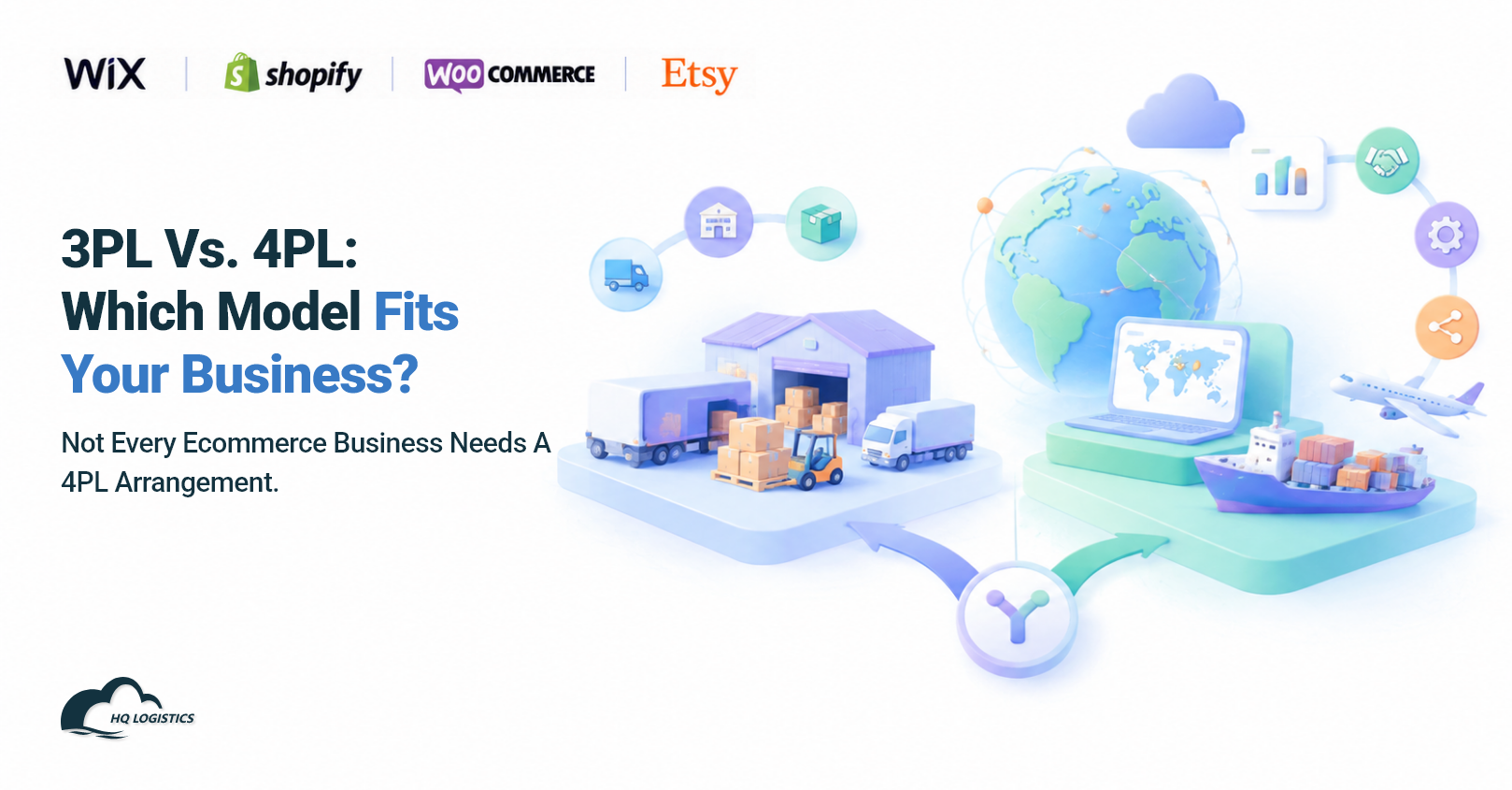
A 3PL typically executes logistics operations. A 4PL approach coordinates the wider supply chain.
In practice, service boundaries vary between providers. Some 3PLs offer sourcing support and other value-added services, while some 4PLs coordinate multiple logistics partners rather than operating every warehouse themselves.
The right choice depends on how much of your supply chain you need help managing.
Here's a practical comparison for growing Shopify businesses.
Business Need | Traditional 3PL Model | 4PL Supply Chain Approach |
|---|---|---|
Warehousing | Stores inventory | Coordinates inventory across locations and providers |
Order fulfillment | Picks, packs, and ships orders | Connects fulfillment with upstream supply chain planning |
Product sourcing | Often managed separately | Can coordinate sourcing and supplier management |
Quality control | May provide inspection services | Can integrate QC into the broader supply chain |
Inventory planning | May provide inventory data | Can coordinate forecasting, replenishment, and allocation |
Shipping | Executes agreed shipping services | Can coordinate routes and logistics providers |
Supply chain visibility | Focuses on its operations | Aims to provide broader supply chain visibility |
Main focus | Logistics execution | End-to-end supply chain coordination |
This table describes common models, not universal rules. Actual capabilities depend on each provider's service offering.
The important point is that 4PL is not simply a more advanced warehouse.
It represents a broader way of coordinating supply chain activities.
One of the clearest signs that your business may need a 4PL approach is when fulfillment problems start happening before products reach the warehouse.
For example, your Shopify store may be generating consistent sales, but:
Your supplier cannot replenish inventory quickly enough.
Product quality varies between batches.
Your packaging supplier delivers materials late.
Inventory is split across locations without clear allocation rules.
Shipping costs are difficult to compare.
You spend too much time coordinating different service providers.
A traditional fulfillment arrangement may handle the warehouse tasks effectively without solving these upstream problems.
A broader supply chain approach connects the different stages so that decisions are made with the whole operation in mind.
Instead of asking only:
"How quickly can we ship today's orders?"
you also ask:
"How do we make sure the right products are available, inspected, packed, and ready to ship when demand increases?"
That shift can help growing brands identify bottlenecks earlier and reduce operational complexity.
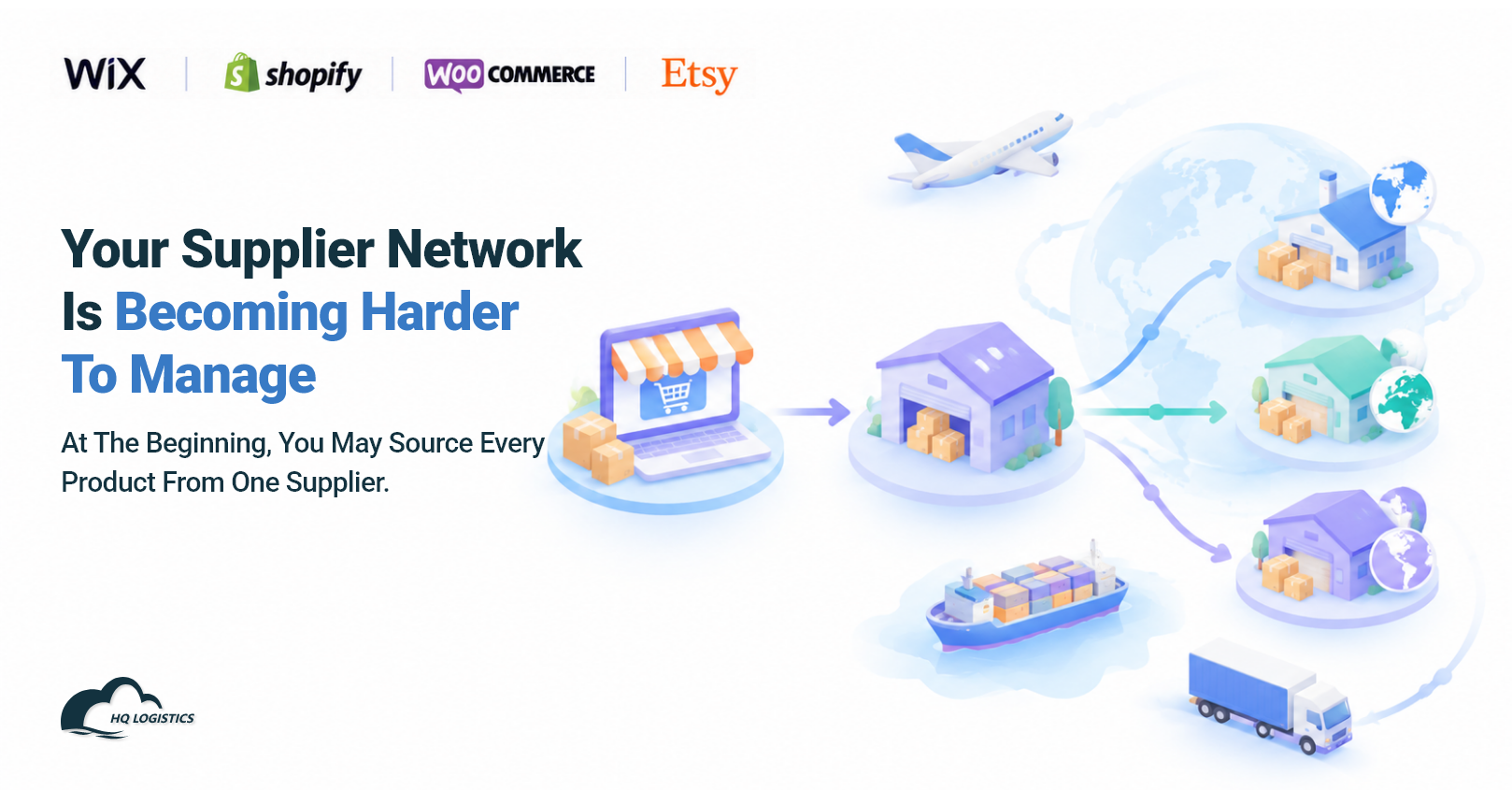
At the beginning, you may source every product from one supplier.
As your business grows, you may work with several factories, packaging suppliers, inspection teams, warehouses, and shipping providers.
Each relationship introduces additional communication and coordination.
Consider this example:
Supplier A → Product Production
Supplier B → Custom Packaging
Inspection Team → Quality Check
Warehouse C → Inventory Storage
Logistics Provider D → International Shipping
Even if every provider performs its own job well, problems can occur between them.
A packaging delay may hold up production. A quality issue may delay warehouse receiving. A shipping decision may depend on inventory that is not yet ready.
A 4PL approach can help coordinate these relationships and establish a more consistent process.
For growing ecommerce brands, this may include:
Comparing supplier options
Standardizing product specifications
Coordinating production schedules
Organizing quality inspections
Planning replenishment
Connecting inventory with fulfillment requirements
The goal is not necessarily to eliminate every supplier.
It's to make the supplier network easier to manage.
As order volume increases, inventory decisions become more important.
Too little stock can lead to lost sales.
Too much stock can tie up cash and increase storage expenses.
If inventory is spread across China, the United States, and Europe, the challenge becomes even more complicated.
You need to know:
How much inventory do I have?
Which products are selling fastest?
Where should each SKU be stored?
When should I reorder?
How much safety stock do I need?
Which products should be moved overseas?
A 3PL may provide inventory reports and warehouse management tools. A 4PL approach can build on that information by coordinating inventory planning with sourcing, replenishment, and transportation.
For example, a hybrid inventory strategy could look like this:
Keep initial inventory in China while testing demand.
Consider pre-stocking selected products in a U.S. or EU warehouse when sales volume and total fulfillment economics support it.
Keep slower-moving products flexible to avoid tying up too much capital overseas.
This approach helps brands balance inventory investment, delivery speed, and stock availability.
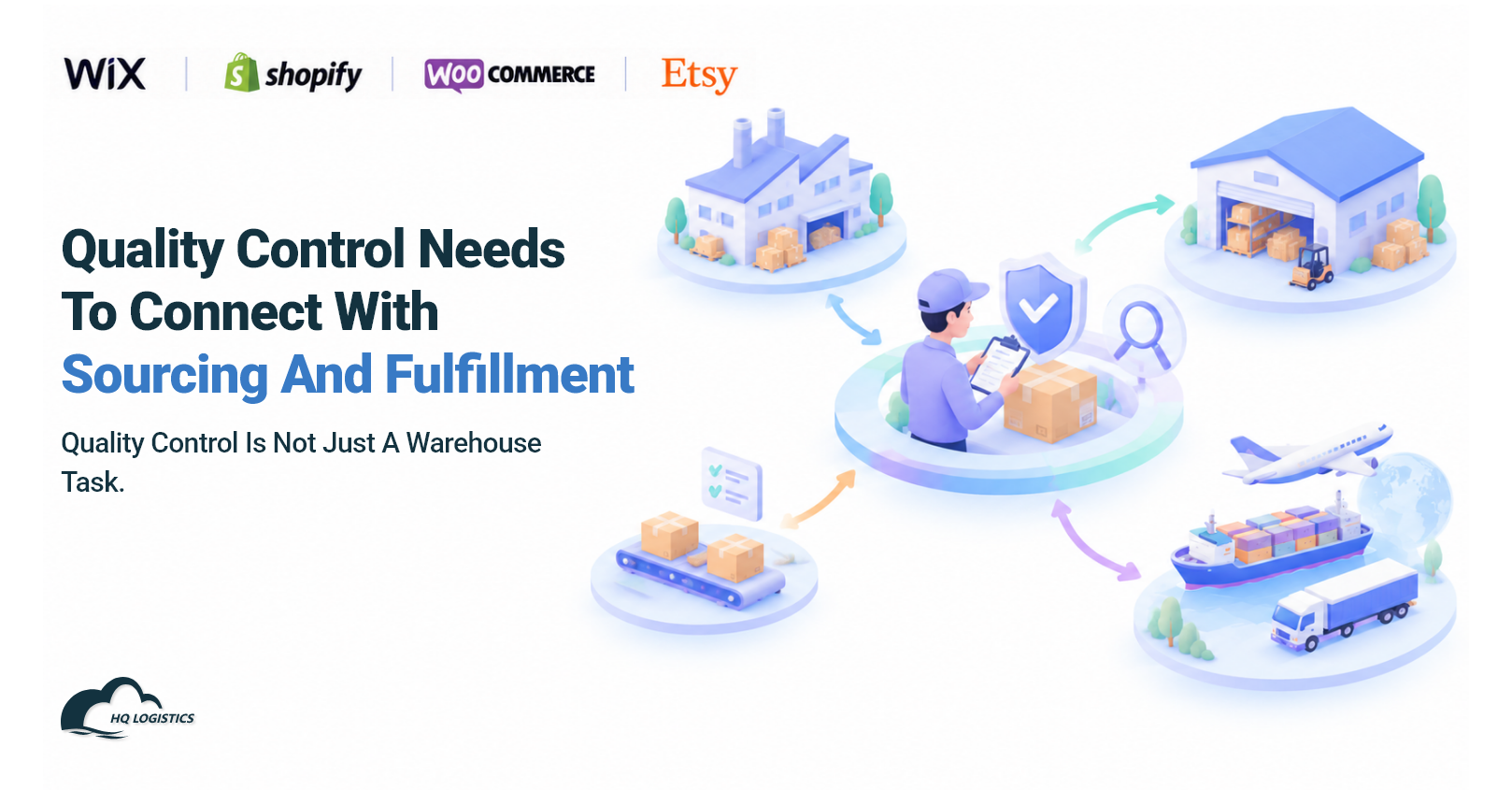
Quality control is not just a warehouse task.
It starts when you choose a supplier and define product specifications.
Imagine a product that performs well during testing but has inconsistent quality in larger production batches.
If the problem is discovered only after orders have been shipped, the consequences may include refunds, replacements, customer complaints, and negative reviews.
A connected quality workflow can look like this:
Supplier Selection → Sample Approval → Production → Quality Inspection → Warehouse Receiving → Fulfillment
Depending on the product, quality checks may cover:
Materials and dimensions
Appearance and construction
Product functionality
Accessories and quantities
Packaging and labeling
Consistency with approved specifications
A 4PL approach can help connect these checkpoints with supplier management and inventory planning.
This is particularly useful for brands selling products where quality consistency is important, such as small electronics, baby products, pet supplies, and beauty accessories.
The objective is to identify problems as early as practical—not after they reach the customer.
When your store is small, one shipping method may be sufficient.
As you expand into different countries and product categories, the best shipping solution may vary.
Your decisions may depend on:
Destination | Product Weight | Product Dimensions | Battery Requirements | Delivery Time | Shipping Cost | Inventory Location
For example:
New Product → China Fulfillment → International Shipping
Proven U.S. Bestseller → U.S. Warehouse → Domestic Fulfillment
Proven European Bestseller → EU Warehouse → Regional Fulfillment
Battery-Powered Product → Confirm Suitable Shipping Channel
A 3PL can execute shipping services based on your agreed requirements. A 4PL approach can help coordinate shipping decisions with sourcing, inventory placement, and overall supply chain performance.
However, overseas warehousing is not automatically cheaper or better for every product.
Before moving inventory, compare the complete cost of direct shipping with the cost of bulk transportation, storage, local fulfillment, and domestic delivery.
The goal is to select the right fulfillment model for each product and market.
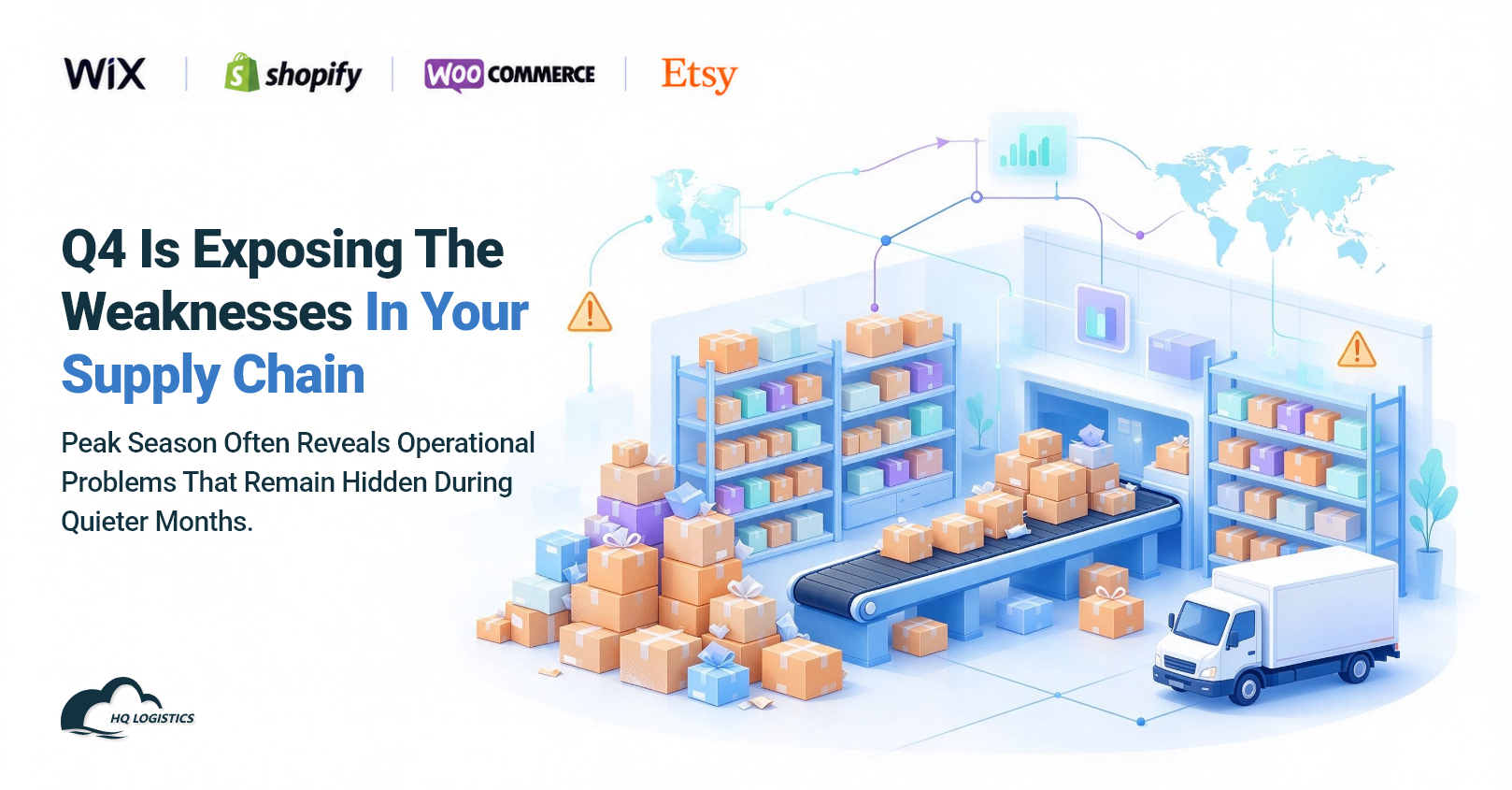
Peak season often reveals operational problems that remain hidden during quieter months.
Black Friday, Cyber Monday, Christmas, and seasonal promotions can create sudden increases in order volume.
If your supplier, warehouse, and shipping provider are not coordinated, a successful campaign can create unexpected pressure.
For example:
More Orders → Faster Inventory Depletion → Replenishment Pressure → Warehouse Backlog → Shipping Delays
A 4PL approach can help coordinate preparation across multiple stages.
Before peak season, review:
Can your suppliers meet the expected production volume?
Are your bestsellers sufficiently stocked?
Can products be inspected before large quantities enter fulfillment?
Can the warehouse handle expected order volume?
Are the primary and alternative shipping options confirmed?
Are suppliers, warehouses, and logistics providers working from the same forecast?
The objective is to prepare the supply chain before demand spikes, rather than trying to solve every issue after it happens.
As your ecommerce business grows, tracking orders alone is not enough.
You also need visibility into inventory, supplier performance, production schedules, and replenishment.
Useful information may include:
Inventory Levels | Incoming Stock | Supplier Lead Times | Quality Results | Order Processing Time | Shipping Performance | Returns
When information is scattered across different systems and providers, it becomes harder to make timely decisions.
A more connected supply chain can help bring this information together and clarify where problems are occurring.
For example, if a bestseller is approaching its reorder point, your team can review supplier lead times, incoming inventory, and warehouse stock before a stockout occurs.
Technology can support this process through order integrations, inventory systems, and tracking synchronization.
But software alone does not create an integrated supply chain.
The real value comes from combining useful data with clear processes, communication, and accountability.
Not every ecommerce business needs a 4PL arrangement.
The right model depends on your operational complexity, order volume, product range, and growth plans.
Your supplier network is stable.
You mainly need warehousing, picking, packing, and shipping.
Your inventory model is relatively simple.
You manage sourcing and inventory planning internally.
Your main priority is reliable order fulfillment.
You manage multiple suppliers and service providers.
Inventory is spread across multiple locations.
Sourcing, quality, and fulfillment problems affect one another.
You need coordinated inventory and shipping decisions.
Your team spends too much time managing supply chain handoffs.
You want a more integrated approach as your business scales.
Some businesses use a combination of both models. A 4PL partner may coordinate multiple 3PLs, carriers, and suppliers rather than replace every provider.
The best model is the one that solves your actual operational problems without adding unnecessary complexity.
You don't need to redesign your entire supply chain overnight.
A phased transition can help you improve coordination while minimizing disruption.
Document each stage, from product sourcing to final delivery.
Identify every supplier, warehouse, logistics provider, and system involved.
Review where delays, unexpected costs, and communication problems occur.
Common issues include slow replenishment, inconsistent quality, poor inventory visibility, and inefficient shipping arrangements.
Create consistent product specifications, packaging instructions, and quality standards.
Share the relevant requirements with suppliers, inspection teams, warehouses, and fulfillment partners.
Use historical sales, current demand, supplier lead times, and planned promotions to forecast inventory requirements.
Prioritize proven products and maintain appropriate safety stock.
Determine whether your products should remain in China or be positioned in the U.S. or EU.
Compare the total cost, inventory risk, and expected delivery performance before making changes.
Where supported, connect your ecommerce store with your fulfillment system to reduce manual order entry and improve tracking visibility.
Monitor indicators such as:
Total Cost per Delivered Order | Inventory Accuracy | Defect Rate | Order Processing Time | On-Time Shipping | Stockout Frequency
Use the results to identify where further improvements are needed.
A gradual transition allows you to test changes, measure results, and expand the new workflow once it is stable.
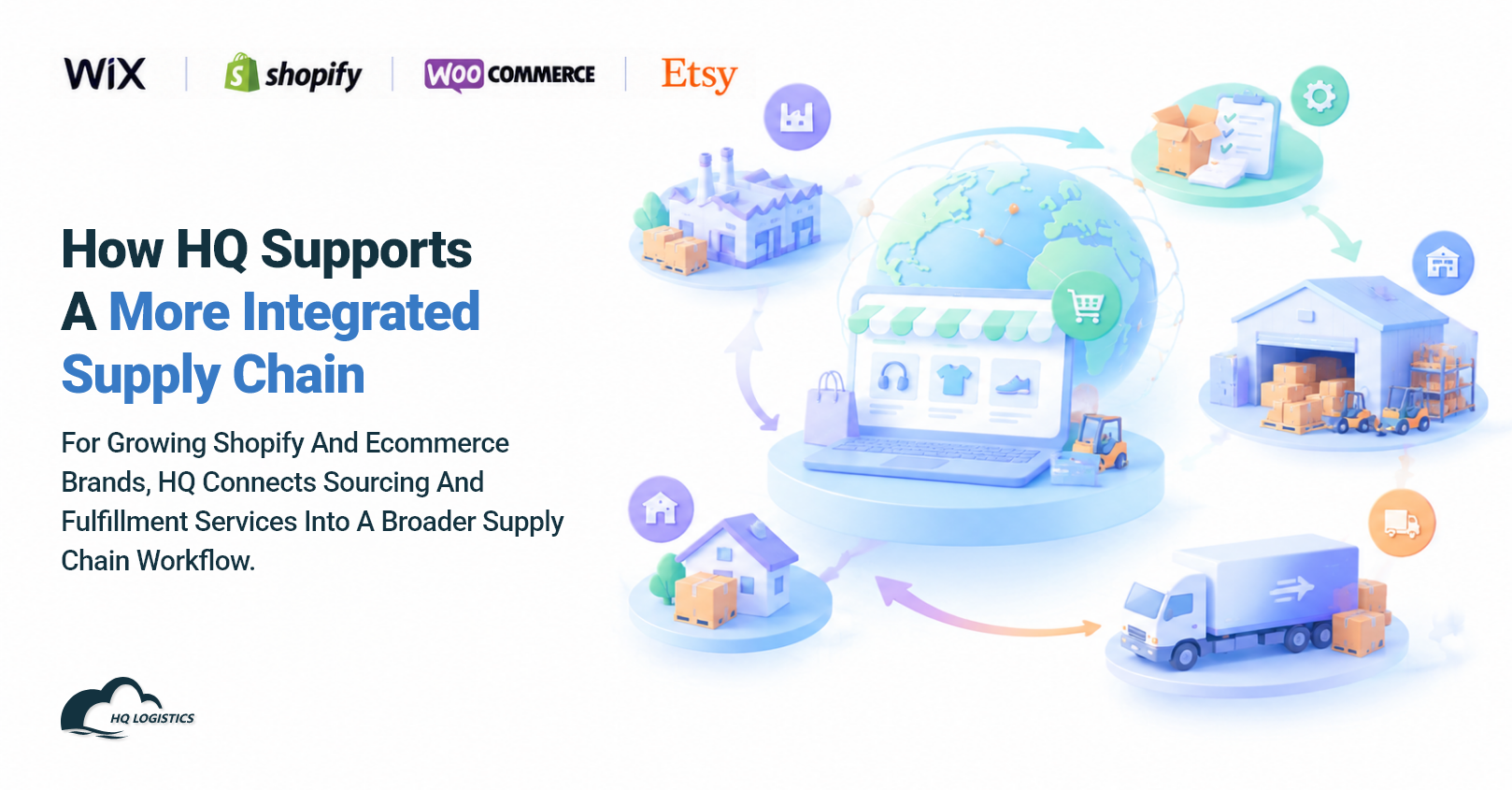
For growing Shopify and ecommerce brands, HQ connects sourcing and fulfillment services into a broader supply chain workflow.
Depending on your business requirements, support can include:
Find suitable products and coordinate supplier options based on product specifications, pricing, quality, and production requirements.
Inspect products before fulfillment to help identify quality issues earlier.
Coordinate branded packaging, labels, inserts, and other customization requirements as part of the fulfillment process.
Keep new products and lower-volume SKUs flexible while testing demand.
For proven products with stable U.S. demand, consider pre-stocking inventory for domestic fulfillment when the economics make sense.
For suitable products with stable European demand, EU warehousing can support fulfillment across multiple EU markets.
Connect supported store workflows with order fulfillment and tracking synchronization to reduce manual work.
Compare logistics options based on product type, destination, weight, cost, and delivery requirements.
The objective is to connect the stages that affect your total fulfillment performance—not simply to add more services.
Sourcing → Quality Control → Inventory → Warehousing → Fulfillment → Global Shipping
When these stages are coordinated, growing brands can make supply chain decisions with a clearer view of cost, inventory, and customer delivery requirements.
A 3PL can be an effective partner when your main need is reliable logistics execution.
But as your ecommerce business grows, your challenges may extend beyond the warehouse.
You may need to coordinate suppliers, improve quality control, plan inventory, position stock across markets, and optimize shipping as one connected process.
That's when a 4PL approach may be worth considering.
The goal is not to replace a 3PL simply because your business has grown.
It's to determine whether your current setup gives you enough visibility, coordination, and control to support the next stage.
If your biggest supply chain problems happen before an order reaches the warehouse, it may be time to think beyond shipping.
Build a supply chain that supports not only the orders you have today, but also the business you want to grow tomorrow.
A 3PL typically provides operational logistics services such as warehousing, picking, packing, and shipping. A 4PL approach coordinates a broader set of supply chain activities, potentially including sourcing, supplier management, inventory planning, multiple logistics providers, and fulfillment.
Not necessarily. A 4PL may coordinate several 3PLs and other service providers. Some 4PLs also provide logistics services directly. The arrangement depends on the provider and the business model.
Consider it when managing multiple suppliers, warehouses, and logistics providers becomes difficult, or when sourcing, inventory, quality, and shipping decisions need better coordination.
Neither model is universally better. A 3PL may be sufficient for a store with straightforward fulfillment needs. A 4PL approach may be more useful for a growing brand with a more complex supply chain.
It can help identify inefficiencies across sourcing, inventory, warehousing, and shipping. Actual savings depend on the products, order volume, destinations, service fees, and operational changes.
Yes. A hybrid model can keep new or low-volume products in China while positioning proven bestsellers in U.S. or EU warehouses when demand and total fulfillment costs justify it.
Evaluate sourcing capabilities, supplier coordination, quality control, inventory visibility, warehouse options, technology integration, shipping flexibility, performance reporting, and total cost.
📩Email: zoye@fulfllment-cn.com
Our website:
https://www.cnfulfillment.com/
PREVIOUS RECOMMENDATIONS


3PL vs. 4PL, 3PL vs 4PL ecommerce, 4PL fulfillment, 4PL supply chain, Shopify fulfillment, ecommerce logistics, end-to-end supply chain, supply chain management, supplier management, inventory planning, global fulfillment, China fulfillment, U.S. warehousing, EU fulfillment, ecommerce fulfillment partner




Customer's favorable comments is our eternal motivation. We feel grateful for all the support and company.

Lorem ipsum dolor sit amet, consetetur sadipscing elitr, sed diam nonumy eirmod tempor invidunt ut labore et dolore magna aliquyam erat, sed diam voluptua.